
Regenerative Medicine in Sarasota, FL
5831 Bee Ridge Rd
Suite 300
Sarasota, FL 34233
Monday - Friday | 8:00 AM - 4:00 PM
Specialties
- Total Shoulder Replacement
- Reverse Shoulder Replacement
- Rotator Cuff Repair
- Shoulder Arthroscopy
- Platelet-Rich Plasma (PRP)
- Laser Therapy
- Cutting Edge Physical Therapy
Non-Surgical Treatment Options for Shoulder and Extremity Pain
Dr. Christopher Dillingham offers the latest in regenerative medicine, helping patients find relief and restore function without surgery. As a fellowship-trained orthopedic surgeon specializing in shoulder, hand, and upper extremity care, Dr. Dillingham understands when surgery is necessary and when a regenerative approach may be the better path forward.
What Is Regenerative Medicine?
Regenerative medicine is a field of treatment focused on harnessing the body’s own healing processes to repair damaged tissue, reduce inflammation, and restore function. Rather than replacing or removing damaged structures through surgery, regenerative treatments work to promote natural healing at the site of injury.
For patients with shoulder pain, rotator cuff disorders, tendon injuries, and joint inflammation, regenerative medicine may offer a way to improve symptoms and delay or avoid surgery altogether.
Platelet-Rich Plasma (PRP) Therapy
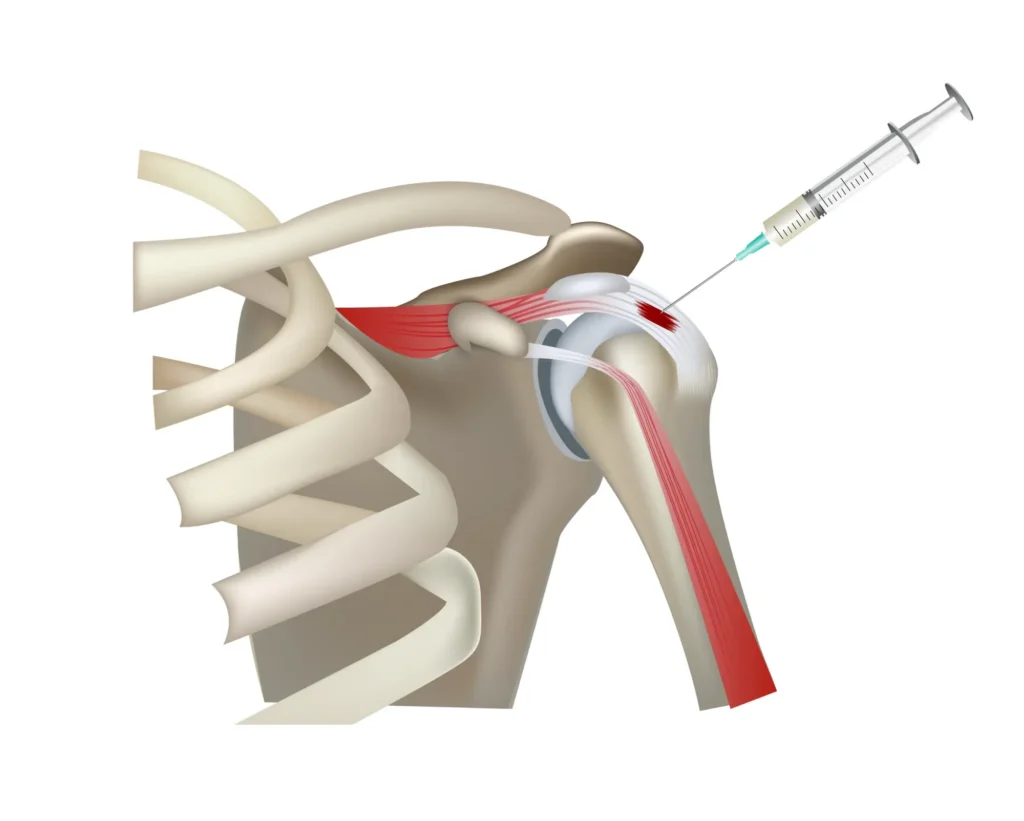
Platelet-rich plasma therapy, commonly known as PRP, is one of the most widely used regenerative treatments in orthopedic medicine. The procedure involves drawing a small sample of the patient’s own blood, processing it in a centrifuge to concentrate the platelets, and injecting the resulting plasma directly into the injured area.
Platelets contain growth factors that play a key role in tissue repair. By delivering a concentrated dose of these growth factors to the site of injury, PRP therapy can accelerate healing, reduce inflammation, and promote the regeneration of damaged tendons, ligaments, and cartilage.
Conditions Treated with PRP
PRP therapy has shown promising results for a range of orthopedic conditions, including:
- Partial rotator cuff tears
- Shoulder tendinitis and tendinopathy
- Tennis elbow (lateral epicondylitis) and golfer’s elbow (medial epicondylitis)
- Chronic tendon injuries that have not responded to rest or physical therapy
- Early to moderate arthritis in the shoulder, elbow, or hand
What to Expect from PRP Treatment
PRP therapy is performed in an office setting and typically takes less than an hour. Because the injection uses the patient’s own blood, there is minimal risk of allergic reaction or rejection. Most patients experience some soreness at the injection site for a few days following treatment. Improvement is gradual, with many patients noticing results over the weeks and months following the procedure as the body’s healing response takes effect.
Who May Benefit from Regenerative Treatment?
Regenerative medicine may be appropriate for patients experiencing:
- Partial rotator cuff tears
- Shoulder tendinitis or tendinopathy
- Early to moderate shoulder arthritis
- Tennis elbow or golfer’s elbow
- Chronic tendon injuries in the hand, wrist, or elbow
- Joint inflammation that has not responded to rest or physical therapy
Dr. Dillingham evaluates each patient individually to determine whether regenerative treatment is a good fit. For some patients, regenerative medicine can be used alongside physical therapy and other conservative measures. For others, it may serve as a bridge to delay surgery or as a complement to a surgical plan.
Surgery Isn't Always the Answer
Dr. Dillingham’s approach to patient care starts with the least invasive option that can produce a meaningful result. Regenerative treatments are one tool in a broader conservative care strategy that may also include physical therapy, activity modification, bracing, and anti-inflammatory medication. When surgery is ultimately the right choice, his fellowship training and surgical experience allow him to select the technique that gives each patient the best possible outcome.
What to Expect
Regenerative treatments are typically performed in an office or outpatient setting. Most patients can return to normal daily activities shortly after treatment, though specific recovery guidelines depend on the type of treatment and the condition being addressed. Dr. Dillingham discusses realistic expectations and timelines with each patient before beginning any course of treatment.
Explore Your Non-Surgical Options
If you are dealing with shoulder pain, a tendon injury, or joint inflammation and want to explore alternatives to surgery, Dr. Dillingham can help determine whether regenerative medicine is right for you.