


If you’re experiencing shoulder pain at night, you are not alone. You go to bed hoping to finally get some relief from the aching, and then, the moment you roll over or settle in, the discomfort flares right back up. Sleep starts to feel impossible. Nights turn into a cycle of shifting positions, stacking pillows, and waking up exhausted. In this post, I’ll walk through some of the most common causes, explain why nighttime tends to make shoulder pain worse, and outline what treatment may look like depending on your specific situation.
Key Takeaways
- Shoulder pain at night may be a sign of an underlying condition that warrants proper evaluation.
- Several common shoulder conditions, including rotator cuff injuries, bursitis, frozen shoulder, and arthritis, can cause or worsen nighttime discomfort.
- Many patients find meaningful improvement through conservative treatments such as physical therapy, activity modification, and in some cases, regenerative options like PRP.
- When conservative care is not enough, surgical treatment may be considered based on the individual’s diagnosis and goals.
Why Does Shoulder Pain Get Worse at Night?
There are actually a few reasons why nighttime may amplify shoulder pain. During the day, you’re upright and moving. Gravity works in your favor to decompress the shoulder joint somewhat. Movement also increases blood flow to the area and distracts your nervous system from the discomfort. At night, that changes.
When you lie down, the dynamics of the shoulder shift. Pressure increases on whichever side you’re sleeping on. Fluid and inflammation may become more noticeable around irritated tissues when lying down. Additionally, in a quiet, dark room, pain signals tend to feel louder. All of this together can turn a manageable ache during the day into something that genuinely disrupts your rest.
Beyond the mechanics of lying down, certain shoulder conditions are simply known to produce more significant nighttime symptoms.
Common Causes of Shoulder Pain at Night
Rotator Cuff Tears and Tendinopathy
Rotator cuff injuries are among the most frequent sources of shoulder pain at night. The rotator cuff is a group of four muscles and tendons that surround and stabilize the shoulder joint. Patients with rotator cuff problems frequently describe difficulty lying on the affected shoulder, as well as pain that radiates down the outer arm when they try to sleep on their back. Some wake up several times throughout the night. Others find that certain sleeping positions feel impossible altogether.
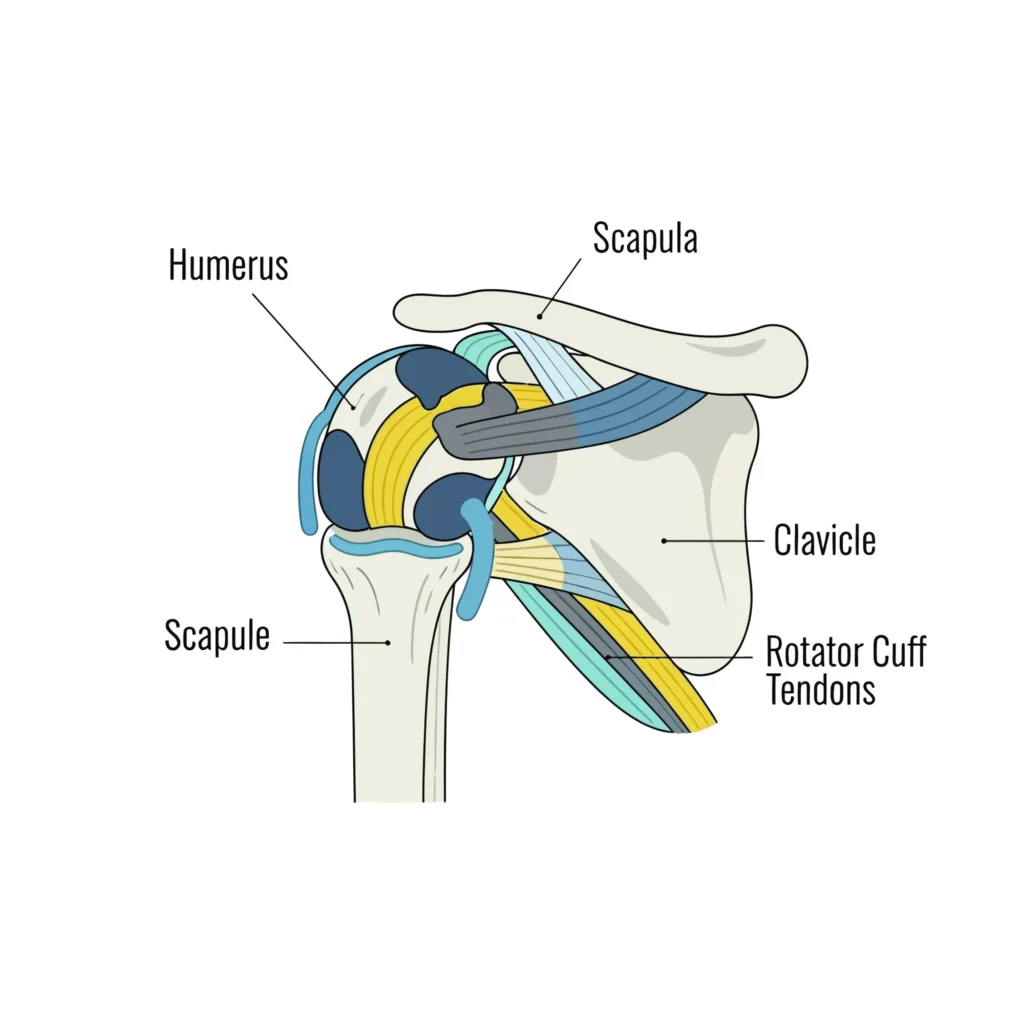
Not every rotator cuff tear requires surgery. Many patients respond well to structured physical therapy, activity modification, and anti-inflammatory strategies. In some cases, regenerative options like platelet-rich plasma therapy may also be considered. When structural damage is significant and symptoms don’t improve with conservative care, rotator cuff repair may be considered.
Shoulder Bursitis
The shoulder contains small, fluid-filled sacs called bursae. Their job is to reduce friction between tendons and bone. When these sacs become inflamed, a condition known as bursitis, they can cause significant pain, especially with pressure or certain movements.
Subacromial bursitis, which affects the bursa sitting just above the rotator cuff tendons, is a particularly common culprit in nighttime shoulder pain. Lying down places direct pressure on that inflamed bursa. Rolling onto the affected shoulder can produce a sharp spike in discomfort that wakes you up immediately.
Bursitis often responds well to conservative management. Physical therapy aimed at improving mechanics and reducing impingement, along with activity modification and appropriate anti-inflammatory strategies, may help.
Adhesive Capsulitis (Frozen Shoulder)
With frozen shoulder, the joint capsule thickens and tightens progressively, restricting movement and causing pain. It can develop after an injury or shoulder surgery, but it sometimes appears without a clear trigger. Patients with diabetes may have a higher risk of developing frozen shoulder compared to the general population.
Early in the process, pain often dominates. Sleep becomes genuinely difficult because even small shifts in position can trigger sharp discomfort. Over time, stiffness tends to become more prominent. Recovery from frozen shoulder takes patience. This condition typically progresses through phases, and treatment usually emphasizes gentle range-of-motion work, physical therapy, and in some cases, injections to help manage inflammation during certain phases.
Shoulder Impingement
Shoulder impingement happens when the rotator cuff tendons or the bursa become compressed between the bones of the shoulder during arm movement or elevation. While many people think of impingement as a “daytime” problem that flares during activity, it can absolutely cause shoulder pain at night as well.
Lying on the affected side places the shoulder in a position that may compress the same tissues that are already irritated. Sleeping with the arm overhead can also aggravate impingement. Physical therapy that focuses on strengthening the muscles that support the scapula and restoring proper shoulder mechanics often plays a central role in managing this condition.
Shoulder Arthritis
Degenerative changes in the shoulder joint can lead to cartilage loss and arthritis. This condition tends to produce a deep, aching pain that can be difficult to escape at night. The shoulder joint doesn’t get the movement it might during the day, and that stillness, combined with the pressure of lying down, can make the aching feel more noticeable.
For patients whose arthritis symptoms are not adequately managed with conservative care, shoulder replacement surgery may be an option worth discussing. Depending on the individual’s anatomy and the degree of joint involvement, either a total shoulder replacement or a reverse shoulder replacement may be considered. These are decisions made together, based on your specific situation, goals, and overall health.
How Sleep Position Affects Shoulder Pain
If you wake up with shoulder pain, how you sleep may be contributing. Here are a few things worth considering.
Sleeping directly on the painful shoulder is one of the most common aggravating factors. That side-lying position places sustained pressure on an already irritated joint, and it can compress the tendons and bursa in a way that causes significant discomfort overnight.
Sleeping on your back is generally thought to be a more neutral position for the shoulder, though arm position still matters. Letting your arm fall to the side, rather than propping it overhead or across the chest, may reduce strain. Some patients find that placing a small pillow under the affected arm helps support the shoulder and reduce tension on surrounding structures.
Stomach sleeping tends to place the shoulder in a rotated position for a prolonged time. That sustained rotation can aggravate rotator cuff and impingement-related symptoms.
None of these are universal rules. What works for one patient may not work for another. But understanding the relationship between position and pain is a useful starting point as you navigate shoulder pain at night.
When Should You See a Doctor?
I’d encourage you to seek an evaluation if you’re experiencing any of the following:
- Shoulder pain at night that has persisted for more than a few weeks
- Difficulty finding a comfortable sleeping position due to shoulder discomfort
- Pain that wakes you from sleep regularly
- Weakness, stiffness, or reduced motion that’s affecting your daily routine
- Pain that started after a fall, impact, or heavy lifting
- Night pain accompanied by numbness or tingling in the arm or hand
An accurate diagnosis is the starting point for effective treatment. A specialist should listen carefully to your history and perform a physical examination. They may order imaging to better evaluate the structures involved.
Treatment Options for Shoulder Pain at Night
Conservative Care First
My approach to shoulder care starts with the least invasive option that can produce a meaningful result. For many patients, that means a combination of physical therapy, activity modification, and anti-inflammatory strategies.
Physical therapy can be especially valuable for shoulder pain at night, because it can help address the underlying mechanical contributors (muscle imbalances, poor posture, restricted range of motion, scapular dysfunction) rather than just the symptom.
For patients dealing with rotator cuff tendinopathy, bursitis, or early shoulder arthritis, regenerative treatments such as platelet-rich plasma (PRP) therapy may also be considered. PRP uses a concentration of your own blood’s growth factors, delivered directly to the injured tissue.
Corticosteroid injections are another tool that may be appropriate in certain situations. They can help reduce acute inflammation and provide a window for therapy to work more effectively.
Surgical Treatment
When conservative care doesn’t provide sufficient improvement, and when the underlying diagnosis warrants it, surgery may be the right path forward. In many cases, shoulder arthroscopy may be a possibility. This minimally invasive approach uses a small camera and specialized instruments inserted through small incisions.
For advanced shoulder arthritis, shoulder replacement may be an option to improve pain and restore function. Recovery timelines and expectations vary depending on the procedure, and we always discuss realistic goals before moving forward.
Summary
Shoulder pain at night is more than just an inconvenience. It’s a signal that something may be going on structurally or mechanically in the shoulder, and it deserves proper attention. Whether the cause turns out to be a rotator cuff problem, bursitis, frozen shoulder, impingement, or arthritis, there are treatment options available. Many patients improve significantly with conservative care. Others benefit from surgical intervention when the underlying condition warrants it.
Frequently Asked Questions
Why does my shoulder hurt more at night than during the day?
Several factors may contribute to this. When you lie down, pressure increases on the shoulder and surrounding tissues. Gravity no longer helps decompress the joint the way it does when you’re upright. Inflammation and fluid can settle around irritated structures. There’s also less distraction from pain signals at night.
Is shoulder pain at night a sign of a rotator cuff tear?
Night pain is a common symptom of rotator cuff pathology, but it can also be caused by bursitis, impingement, arthritis, and other shoulder conditions. A physical examination and, in many cases, imaging, are typically needed to determine the specific cause and guide appropriate treatment.
Can I treat shoulder pain at night at home?
Adjusting your sleep position, using a supportive pillow, and avoiding sleeping directly on the affected shoulder may provide some relief in the short term. Over-the-counter anti-inflammatory medications may help in mild cases. However, if your nighttime shoulder pain is persistent, worsening, or significantly affecting your sleep, it’s worth seeking a professional evaluation to identify the underlying cause and explore more targeted treatment options.