

A common question I hear from patients in my office is this: “Do rotator cuff tears always require surgery?” A rotator cuff tear diagnosis can feel overwhelming. To answer the question, not every rotator cuff requires an operation. My approach to patient care always starts with the least invasive option that can produce a meaningful result. For many patients, that means conservative treatment rather than surgery. For others, surgical intervention ultimately becomes the most effective path forward. Either way, the goal is always the same: to help you move better, feel better, and get back to your life with less pain and greater function.
Key Takeaways
- Not every rotator cuff tear requires surgery. Many patients experience improvements with conservative care, including physical therapy and activity modification.
- Treatment decisions depend on multiple individual factors, including tear size, your age, activity level, overall health, and how much symptoms are affecting daily life.
- When surgery is the right call, arthroscopic rotator cuff repair offers a minimally invasive approach.
What Is the Rotator Cuff, and Why Does It Tear?
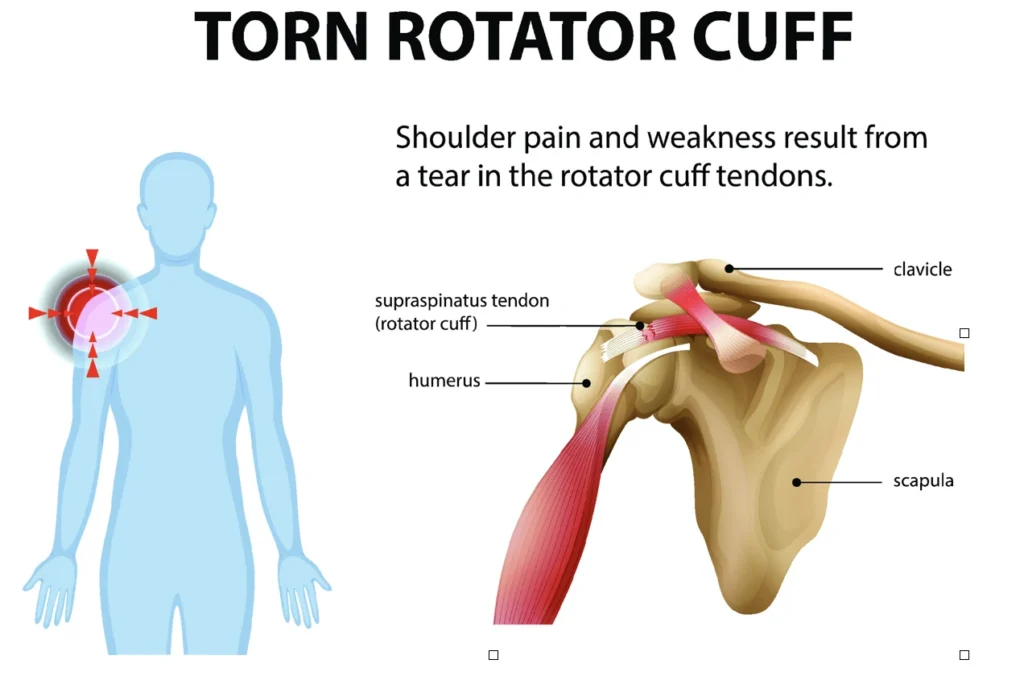
The rotator cuff is a group of four muscles and tendons that surround and support your shoulder joint. Together, these structures hold the ball of your upper arm bone securely within the shoulder socket and give you the ability to lift, reach overhead, rotate, and control your arm through a wide range of motion. When one or more of those tendons tears, it disrupts that system. Pain, weakness, and limited motion often follow.
Rotator cuff tears tend to fall into two broad categories. Acute tears happen suddenly, typically from a fall, a sports injury, or a single forceful movement such as lifting something too heavy. Degenerative tears develop gradually over time. Tendons naturally weaken and fray with age and repetitive use, making them more vulnerable to tearing even with routine daily activities. This type of tear is more common in adults over 40 and may not be tied to any specific event at all.
Both types can vary significantly in severity, from small partial tears, where the tendon is damaged but still partially intact, to complete tears, where the tendon has fully detached from the bone. That spectrum of severity plays a role in determining the most appropriate treatment approach for each individual patient.
Signs You May Have a Rotator Cuff Tear
Rotator cuff tears don’t always present the same way. Some patients come in after a specific injury with sudden, sharp pain and immediate weakness in the arm. Others describe a dull, nagging ache that has been building for months, particularly at night when lying on the shoulder or when reaching in certain directions.
Common symptoms that may suggest a rotator cuff tear include:
- Pain at rest, especially when lying on the affected shoulder at night
- Weakness when lifting or rotating the arm
- A crackling or popping sensation during shoulder movement
- Difficulty reaching overhead or behind the back
- Pain that worsens with certain activities or disrupts sleep
That said, symptoms alone don’t tell the complete story. An MRI may be used to confirm the tear, assess its size and location, and help guide a treatment plan. A thorough physical exam is also an essential part of that process. How your shoulder moves and responds to specific tests provides clinical information that imaging alone may not fully capture.
Not Every Rotator Cuff Tear Requires Surgery
Rotator cuff tears do not automatically mean a trip to the operating room. Research and clinical experience both show that many patients may achieve meaningful pain relief and functional improvement through non-surgical care. The right treatment depends on a range of individual factors: the size and type of the tear, your age, your overall health, your activity demands, and how much your symptoms are affecting your ability to live your life.
Partial tears, in particular, often respond well to conservative management. Degenerative tears in older patients with more moderate activity demands can also be strong candidates for non-surgical care. I take the time to evaluate each patient individually, review imaging carefully, and discuss the options openly so you can make an informed decision about your own care.
Non-Surgical Treatment Options
When surgery isn’t immediately indicated, there are several conservative approaches an experienced shoulder specialist may recommend depending on your specific situation and goals.
Physical Therapy
Physical therapy is often a component of non-surgical rotator cuff management. A skilled therapist can help you strengthen the muscles surrounding your shoulder, improve your movement mechanics and posture, and reduce the strain placed on the injured tendon. This kind of targeted, progressive approach may meaningfully decrease pain and improve how your shoulder functions.
Activity Modification
Sometimes a strategic adjustment to how you use your shoulder is one of the most effective short-term tools we have. Temporarily avoiding or modifying movements that aggravate the injured area can allow inflammation to settle and give your shoulder the relative rest it needs to calm down. I work with patients to identify specific aggravating activities and find practical ways to modify them without putting their entire life on hold.
Anti-Inflammatory Medication
Over-the-counter anti-inflammatory medications, like NSAIDs, may help manage pain and reduce swelling in the short term.
Regenerative Medicine
My practice also offers regenerative treatment options that may benefit select patients with rotator cuff injuries. Platelet-rich plasma (PRP) therapy uses a concentrated portion of your own blood, rich in healing growth factors, and delivers it directly to the injured area. The goal is to help stimulate the body’s natural repair process and reduce local inflammation. PRP is performed right here in the office and typically takes less than an hour. It isn’t a guaranteed fix, and it works best in specific clinical situations, but it may be a valuable addition to a broader conservative care plan for the right candidate.
When Surgery May Be the Right Choice
Non-surgical treatment isn’t the right answer for everyone. There are clinical situations where surgery becomes the most appropriate option, and sometimes, the most effective path to a durable, long-term recovery.
Surgical intervention may be the most appropriate next step when:
- A complete tear is causing significant weakness and meaningful functional loss that isn’t improving
- Conservative treatment has been pursued consistently over an appropriate period without adequate results
- An acute traumatic tear occurs in a younger or highly active patient
- The tear is large enough that the risk of it progressing without repair outweighs the surgical risk
- The surrounding muscle tissue hasn’t yet undergone changes that could limit the success of a repair
Timing can also matter more than people might expect. Every situation is different, and I take the time to thoroughly evaluate each patient’s imaging, symptoms, and lifestyle before recommending an operation.
Arthroscopic Rotator Cuff Repair
When surgery is indicated, I typically perform arthroscopic rotator cuff repair through small incisions using a tiny camera and specialized instruments. This minimally invasive approach may allow me to reattach the torn tendon back to the bone while causing minimal disruption to the surrounding tissue. However, the size, location, tissue quality, and complexity of the tear all influence which technique may be recommended.
Summary
Rotator cuff tears are among the most common shoulder injuries I see. Many patients assume that a tear automatically means surgery, and that’s not the case. Whether surgery is the right choice depends on a range of individual factors, including the size and type of the tear, your age and activity level, your overall health, and how your symptoms are currently affecting daily life. Non-surgical options, including physical therapy, activity modification, anti-inflammatory treatment, and regenerative therapies like PRP, may provide relief for many patients. When surgery is ultimately the best path forward, arthroscopic rotator cuff repair offers a minimally invasive approach to restoring strength and function. Whatever treatment makes the most sense for your situation, my goal remains the same: to help you get back to doing what matters most, with less pain and better function.
Frequently Asked Questions
Can a rotator cuff tear heal on its own without treatment?
Rotator cuff tendons may have a limited ability to fully heal on their own, largely due to their relatively poor blood supply. However, many patients with partial tears may experience symptom improvement through structured conservative care, even without the tear itself fully repairing. The goal of non-surgical treatment is often to reduce pain and restore meaningful function, not necessarily to regenerate torn tissue entirely. Whether a tear ultimately requires surgery depends on factors including its size, your symptoms, and how well you respond to conservative measures over time.
What happens if I wait too long to treat a rotator cuff tear?
In some cases, delaying treatment may allow the tear to grow and the surrounding muscle to weaken or undergo structural changes over time. This can sometimes make surgical repair more challenging and may affect long-term outcomes. That said, not every tear behaves the same way, and the right approach truly depends on your specific situation.
How do I know if my shoulder pain is a rotator cuff tear or something else?
Shoulder pain may come from a number of conditions, including impingement, arthritis, or tendon inflammation. A rotator cuff tear may be more likely if you’re experiencing weakness (not just pain), difficulty lifting your arm, or trouble with overhead or behind-the-back movements. A physical exam combined with imaging, like an MRI, is the most reliable way to make the diagnosis.